Get in touch
Web Banner The AI Orchestrated Asset Manager Blogs 2

Compliance without compromise: How AI eliminates risk latency in fund operations

Every compliance team in asset management knows the feeling. A regulatory deadline is approaching. Documents need reviewing against an updated set of disclosure rules. The spreadsheet tracking which funds have been checked, by whom, and against which requirements is already out of date. And somewhere in the process, a gap will go unnoticed until an auditor finds it. 

This is risk latency: the delay between a compliance requirement changing and your firm confirming, with certainty, that every document meets it. In a manual environment, that latency is measured in weeks or months. In a regulated industry where enforcement action can halt fund distribution entirely, it is arguably the single most dangerous operational gap an investment manager carries. 

The good news is that AI-powered compliance tools have matured to the point where this gap can be closed. The question for compliance leaders is no longer whether automation can handle regulatory document review, but how quickly they can deploy it. 

The compliance burden is growing faster than teams can scale 

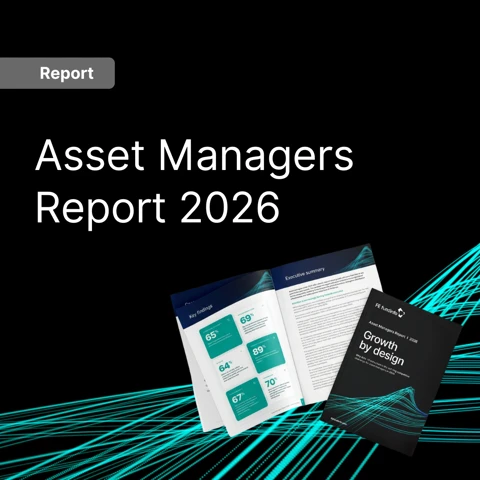
The numbers paint a clear picture. According to the FE fundinfo Asset Managers Report 2025, 37% of investment managers say regulatory document production consumes the most operational resources of any function. Meanwhile, 46% cite legacy systems as their biggest barrier to efficiency, and 64% are prioritising automation and digitisation as a strategic response. 

These figures reflect an industry under genuine strain. The UK's Consumer Composite Investments (CCI) regime alone introduces hundreds of specific disclosure requirements that fund documents must satisfy. Add SFDR reporting obligations, PRIIPs updates, AIFMD2 preparations, and the FCA's ongoing Consumer Duty expectations, and compliance teams face an expanding web of rules across multiple jurisdictions, often with overlapping deadlines. 

The traditional response has been to add headcount or extend working hours. Neither approach scales. A compliance officer reviewing fund documents manually against CCI requirements must cross-reference each document line by line against the relevant rules, track which version of the regulations applies, confirm that data points are current, and record the outcome for audit purposes. Multiply that across dozens or hundreds of funds, each with multiple share classes, and the review cycle can stretch across weeks for a single regulatory update. 

The risk compounds at every stage. Manual review is inherently inconsistent. Different reviewers apply different interpretations. Fatigue leads to missed items. Version control issues mean teams sometimes review against outdated requirements. And the longer the review takes, the wider the window of exposure between a rule changing and your documents reflecting that change. 

What AI compliance tools actually do (and what to look for) 

For compliance professionals evaluating AI tools for the first time, it helps to understand what "automated regulatory document compliance checking" means in practice. 

At its core, the technology works by ingesting your fund documents and comparing their content, structure, and data against a structured rule set. Rather than a human reading each page and mentally cross-referencing it against the relevant regulation, the AI system performs that comparison computationally, flagging where documents meet requirements and where gaps exist. 

The critical differentiators between tools are threefold. 

First, the specificity and breadth of the rule set matters enormously. A tool that checks documents against broad compliance categories ("does this document include a risk disclosure?") is fundamentally less useful than one that checks against granular, regulation-specific rules ("does this document disclose the specific cost components required under CCI Rule 4.2.3?"). The more specific the rule set, the more actionable the output. 

Second, the data source underpinning the AI determines whether outputs can be trusted. Generic AI tools trained on internet data will generate plausible-sounding compliance assessments that may be entirely wrong. In regulated financial services, plausible is dangerous. The AI must be grounded in verified, industry-specific data to produce outputs that compliance teams and regulators can rely on. 

Third, auditability is non-negotiable. Every finding the tool produces must be traceable to a specific rule and a specific section of the document. Compliance teams need to demonstrate to auditors and regulators exactly what was checked, when, against which version of the rules, and what the outcome was. If the tool cannot produce a clear audit trail, it creates more risk than it removes. 

How Document Inspector works 

FE fundinfo's Document Inspector, part of the Nexus AI suite, is built specifically to address these requirements. 

Document Inspector automates compliance checks against more than 150+ specific UK CCI rules. When a compliance team uploads fund documents, the system analyses each document against this rule set and produces a detailed breakdown showing which requirements are met, which have gaps, and which need attention. Each finding is mapped to the specific regulatory rule it relates to, creating an audit-ready output that compliance teams can use directly in their regulatory submissions and internal governance processes. 

The system draws on FE fundinfo's experience producing over 550,000 regulatory documents annually across 75+ jurisdictions. That depth of regulatory expertise is encoded into the rule engine, meaning the checks reflect the practical realities of how regulators interpret and enforce the rules, not just the letter of the legislation. 

The impact on review timelines is significant. Document Inspector reduces compliance review from weeks of manual cross-referencing to automated analysis that delivers results in seconds. For firms managing multiple fund ranges across jurisdictions, this translates to hundreds of hours reclaimed annually for higher-value compliance work: regulatory horizon scanning, policy development, and strategic advisory to the business. 

Addressing the trust question: can AI really replace manual compliance review? 

For compliance professionals, trust is the central concern. Regulatory document review is a high-stakes activity. Errors carry enforcement risk, reputational damage, and potential financial penalties. Any tool claiming to automate this work must meet an exceptionally high bar for accuracy and reliability. 

Three aspects of Nexus AI's architecture are designed specifically to meet that bar. 

The data foundation is FE fundinfo's "golden source," comprising 9 million verified data points across 100,000+ active funds and 300,000+ share classes. This is the same data that underpins the regulatory documents FE fundinfo already produces for the industry. Nexus AI draws on this verified data rather than internet-sourced information, which means outputs reflect actual fund data rather than AI-generated approximations. 

No client data leaves your secure perimeter. No client data is used to train external models. The platform is ISO 27001 and ISO 9001 compliant, applying the same security standards as the broader Nexus platform that firms already rely on for fund operations. 

And critically, the system is designed to augment compliance professionals rather than replace their judgement. Document Inspector identifies where documents stand against regulatory requirements. The compliance team then decides what action to take. The AI handles the computationally intensive work of comparing documents against hundreds of rules simultaneously. Humans retain ownership of interpretation, decision-making, and sign-off. 

This is an important distinction. Compliance review involves judgement calls that require contextual understanding, regulatory relationships, and institutional knowledge. AI excels at the pattern-matching, data-comparison, and consistency-checking components of the work. By handling those at speed and scale, it frees compliance professionals to focus on the areas where their expertise adds the most value. 

What the transition looks like in practice 

For compliance teams considering this shift, the practical question is how adoption works. Nexus AI is embedded directly within the Nexus platform, which means there is no separate integration project, no new system for teams to learn, and no disruption to existing workflows. Firms already using Nexus for fund data management, document production, or distribution gain access to AI capabilities within the environment they already operate in. 

The conversational interface means teams can start using the system immediately. Upload a document, ask Document Inspector to check it against CCI requirements, and receive a structured breakdown within seconds. There is no training programme to complete and no six-month implementation timeline to navigate. The value is immediate and measurable from the first document reviewed. 

For firms managing compliance across multiple jurisdictions, this embedded approach is particularly valuable. The same platform that handles UK CCI checks can accommodate regulatory requirements across the 75+ jurisdictions FE fundinfo supports, providing a single compliance workflow rather than jurisdiction-by-jurisdiction manual processes. 

The cost of waiting 

The UK CCI regime has a clear implementation timeline, and firms that are not yet systematically checking their fund documents against its requirements face growing exposure. Every week of manual review that passes is a week where gaps may exist undetected. 

Beyond CCI specifically, the broader regulatory trajectory is clear. Disclosure requirements are becoming more granular, not less. The volume of regulatory change is accelerating, not slowing. And regulators are increasingly expecting firms to demonstrate systematic, auditable compliance processes rather than relying on periodic manual reviews. 

For compliance leaders evaluating their options, the question is straightforward. A compliance function built on manual review processes will continue to consume a disproportionate share of operational resources while delivering inconsistent coverage and limited audit trails. An AI-augmented compliance function can deliver comprehensive, auditable coverage at a fraction of the time and cost, while freeing the compliance team to focus on the strategic and advisory work that protects the firm most effectively. 

The technology is ready. The regulatory pressure is here. And the firms that move first will carry the least risk. 

Firms that do not control a reliable data foundation are not ready for AI at the level that creates competitive advantage. Firms that do, or that partner with a platform that does, are positioned to move considerably faster. 

Trust, auditability, and who makes the final call 

A question that surfaces consistently when investment management firms consider AI adoption: How do we know we can trust it? 

FE fundinfo’s answer to this is architectural, not aspirational. Every output from Nexus AI is grounded in verified data. Every AI feature operates within strict guardrails that keep client data private and secure. And critically, every final decision stays with the human team. 

Ali Hussein, AI Product Manager at FE fundinfo, puts it plainly: “AI does the prep work, but humans must always make the call.” 

In the Document Inspector, this means every potential issue is flagged with a reason, a regulatory citation, and a reference to the relevant passage in the document. The AI prepares the review. The compliance professional decides whether to act. The output is timestamped, versioned, and auditable, ready for a regulator if needed. 

This is not a compromise between capability and control. It is how AI should be designed for regulated industries. The goal is not to replace human judgement. The goal is to make human judgement faster, better-informed, and less burdened by tasks that do not require it. 

The competitive gap is opening now 

The investment management industry is not waiting for AI to mature. It is already separating into two groups. 

One group is using AI to reduce headcount and cut costs in individual functions. These firms will see efficiency gains. They will also remain structurally the same, reactive to regulatory change, slow to respond to competitive pressure, limited by the throughput of their manual processes. 

The other group is using AI to move faster at the organisational level. To bring products to market more quickly. To respond to distributors with verified data in real time. To monitor their entire fund universe for compliance risk without increasing the size of their compliance team. 

The distance between these two groups will compound over time. Firms that build connected, AI-augmented workflows today will be operating at a level of decision velocity that manual firms cannot match in 2026, 2027, or beyond. 

The transition from manual firm to augmented firm does not require a transformation programme. It does not require a new technology stack. It requires a different question: instead of ‘how do I make this team more efficient?’ rather ‘how do I make our organisation faster?’ 

That question is where the work begins.

Try it now

Check Your Fund Documents Against 150+ UK CCI rules

Upload either your KID or KIID in PDF format to receive instant compliance gap analysis against FCA UK CCI requirements. We will email your assessment rating and help you find out exactly which of 150+ regulatory requirements your documents meet, and which need attention. 

  • Nexus For Asset Management

About Nexus AI

Nexus AI is FE fundinfo’s AI enablement layer, purpose-built for investment management. It is embedded directly into the Nexus platform, grounded in, FE fundinfo's golden source of 9 million verified data points to automate compliance checking, accelerate research, and surface risk across your fund universe. Every output is cited, auditable, and traceable to source. Your data never leaves your secure environment and is never used to train models.