Get in touch
Web Banner The AI Orchestrated Asset Manager Blogs 2

The Augmented Firm: How decision speed separates the winners

The asset management industry has a well-documented productivity problem. It just rarely gets named directly. 

Compliance documents that take weeks to review. Competitive research assembled manually, slide by slide. Teams that work from fragments of data rather than the full picture. Regulatory obligations that grow faster than the headcount managing them.

These are not niche problems for poorly-run firms. They are structural conditions shared across the industry, from boutique managers with ten people to established mid-market firms with hundreds. And they are becoming harder to absorb. 

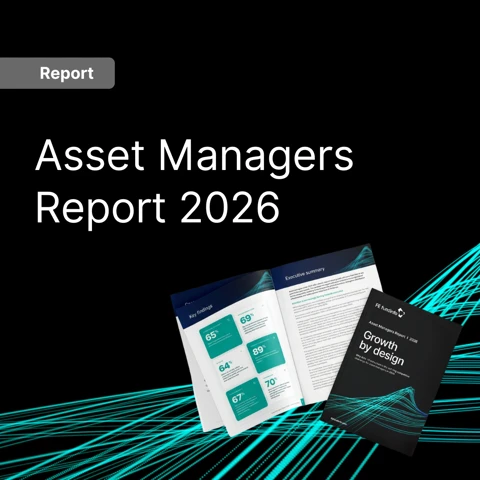
According to FE fundinfo’s own research, 37% of asset managers identify regulatory document production as the single biggest consumer of operational resources. 46% cite legacy systems as their primary barrier to efficiency. And 64% say automation and digitisation are now a strategic priority, not a future ambition, but a present-tense commitment. (FE fundinfo – Asset Managers Report 2025) 

The pressure is real. The question is how firms respond to it. 

Two ways to use AI. One of them works. 

Most investment management firms are already using AI in some form. A compliance officer using a language model to draft a response. A distribution analyst asking an AI assistant to summarise a competitor factsheet. Individual teams are moving at speed to increase gains. 

This is a reasonable place to start. But it is not where competitive advantage is won. 

In a recent webinar, FE fundinfo’s Head of AI Innovation, Andrew Flook, drew a distinction that gets to the heart of this. Firms using AI to optimise existing silos, making a single team faster without changing how the organisation connects, are adding fuel to an engine without changing the engine. The gains are local and the structure stays the same. 

“The winners are going to be the ones who have found the way to unlock growth,” Flook argued, “get into new markets, get wider distribution, get things to market faster, have better quality outputs. And that only comes from breaking out of silos.” 

—Andrew Flook, Head of AI Innovation, FE fundinfo

The distinction matters because it changes the question firms are asking. The question is not: How do I make my compliance team more efficient? The question is: How do I make the entire journey from data to decision faster, more accurate, and more scalable? 

These two questions lead to very different investments which.  And they lead to very different outcomes. 

The three stages of AI adoption in investment management 

FE fundinfo describes AI adoption in investment management in three phases. Understanding where a firm sits on this journey is the first step to moving forward with purpose. 

Phase oneHuman-operated. AI is embedded in individual workflows. Users initiate tasks, review outputs, and remain in direct control. The benefit is immediate time savings with low disruption. The limitation is that gains stay within the team using the tool. 

Phase twoHuman-orchestrated. This is where FE fundinfo sees most firms already in or entering today. Individual AI features begin to combine into agents that handle multi-step tasks independently, returning to the user only at key decision points. A compliance check is no longer a single automated step — it is a chain of actions across documents, data sources, and rule sets. Teams see measurable reductions in operational effort. ROI becomes visible at an organisational level. 

Phase threeHuman-observed. Agents chain together to deliver complete workflows. Humans monitor outcomes through audit trails and intervene by exception. Entire functions operate at a level of scale and consistency that manual processes cannot match. 

Most investment management firms are somewhere between phase one and phase two. The gap between those phases, between assisted work and orchestrated intelligence, is where the real competitive distance is created. 

What the augmented firm looks like in practice 

The concept of the augmented firm is not abstract. It describes a specific operational model: one where human expertise is reserved for decisions that require judgement, and AI handles the routine, repeatable, and rule-bound tasks that currently consume most of the working day. 

Consider three concrete examples from across the investment management lifecycle. 

Document compliance at scale. Producing thousands of compliance documents per quarter and relying on human reviewers to spot-check a sample is a risk that most firms have simply normalised. The AI Document Inspector within Nexus AI changes this. It runs, CCI documents through 150+ UK CCI regulatory rulesets, as well as EU PRIIPs KIDs through the EU PRIIPs ruleset, and flags issues in under two minutes. Every flag includes a citation to the specific rule and the relevant section of the document. Reviewers know exactly where to ooklook with. Nnothing is left to chance. 

Cross-document integrity. Compliance risk is not only about individual documents. It is about consistency across an entire fundsmultiple legal, compliance and marketing data and documents and data universe. Nexus AI’s fund universe integrity engine cross-references KIIDs, factsheets, and underlying data, fund by fund, share class by share class, checking investment objectives, exposure limits, and data points qualitatively as well as quantitatively. Discrepancies are surfaced before they become regulatory issues, not after. 

Research and competitive intelligence. Distribution and investment teams spend hours on manual fund research: peer comparisons, fee benchmarking, regulatory data, performance analysis. Nexus AI’s fund intelligence agents synthesise answers in seconds. Every figure is cited back to FE fundinfo’s golden source of data, the same verified dataset that underpins 550,000+ regulatory documents produced annually. The output is not an estimate. It is a sourced, dated, audit-ready answer. 

These are not three separate tools solving three separate problems. They are interconnected capabilities built on the same trusted data foundation, within the same platform teams already use. 

The data question that determines everything 

Of course, AI is only as reliable as the data it works with. This is the central factor determining whether AI investment delivers real value or becomes another expensive experiment. 

FE fundinfo’s philosophy on this is explicit. The company operates on a collect-once-distribute-everywhere model: data is captured once, validated, and cascades across the entire Nexus ecosystem. Every AI capability built on top of that foundation works from a single source of truth. There is no reconciliation between systems. There is no version control problem. There is no hallucination risk from unverified sources. 

For investment management firms building their own AI strategy, this principle is worth internalising. The firms that will extract genuine value from AI over the next two years are not necessarily the ones with the most sophisticated models. They are the ones with the cleanest, most connected, and most trustworthy data. 

“Your data is your moat,” said Paul Ronan, CTO of FE fundinfo. “It allows you to lead your own disruption.” (How AI is transforming Asset & Wealth Management — Episode 1: From Data to Decisions

Firms that do not control a reliable data foundation are not ready for AI at the level that creates competitive advantage. Firms that do, or that partner with a platform that does, are positioned to move considerably faster. 

Trust, auditability, and who makes the final call 

A question that surfaces consistently when investment management firms consider AI adoption: How do we know we can trust it? 

FE fundinfo’s answer to this is architectural, not aspirational. Every output from Nexus AI is grounded in verified data. Every AI feature operates within strict guardrails that keep client data private and secure. And critically, every final decision stays with the human team. 

Ali Hussein, AI Product Manager at FE fundinfo, puts it plainly: “AI does the prep work, but humans must always make the call.” 

In the Document Inspector, this means every potential issue is flagged with a reason, a regulatory citation, and a reference to the relevant passage in the document. The AI prepares the review. The compliance professional decides whether to act. The output is timestamped, versioned, and auditable, ready for a regulator if needed. 

This is not a compromise between capability and control. It is how AI should be designed for regulated industries. The goal is not to replace human judgement. The goal is to make human judgement faster, better-informed, and less burdened by tasks that do not require it. 

The competitive gap is opening now 

The investment management industry is not waiting for AI to mature. It is already separating into two groups. 

One group is using AI to reduce headcount and cut costs in individual functions. These firms will see efficiency gains. They will also remain structurally the same, reactive to regulatory change, slow to respond to competitive pressure, limited by the throughput of their manual processes. 

The other group is using AI to move faster at the organisational level. To bring products to market more quickly. To respond to distributors with verified data in real time. To monitor their entire fund universe for compliance risk without increasing the size of their compliance team. 

The distance between these two groups will compound over time. Firms that build connected, AI-augmented workflows today will be operating at a level of decision velocity that manual firms cannot match in 2026, 2027, or beyond. 

The transition from manual firm to augmented firm does not require a transformation programme. It does not require a new technology stack. It requires a different question: instead of ‘how do I make this team more efficient?’ rather ‘how do I make our organisation faster?’ 

That question is where the work begins.

  • Nexus For Asset Management

About Nexus AI

Nexus AI is FE fundinfo’s AI enablement layer, purpose-built for investment management. It is embedded directly into the Nexus platform, grounded in, FE fundinfo's golden source of 9 million verified data points to automate compliance checking, accelerate research, and surface risk across your fund universe. Every output is cited, auditable, and traceable to source. Your data never leaves your secure environment and is never used to train models.