Get in touch
Web Banner FE Fundinfo The Distributor's Guide To Fund Data Excellence

Embargo: the compliance risk hiding inside your investment data feeds

Every holdings file, every price, every disclosure you receive from an asset manager comes with a condition attached. Before you ever see the data, someone has already decided when you are allowed to see it, and what you are allowed to do with it once you do. 

That condition is the embargo, and it is quietly one of the most expensive problems in fund data operations today. This article tackles the part of investment data feeds that gets the least attention while carrying some of the highest risk. 

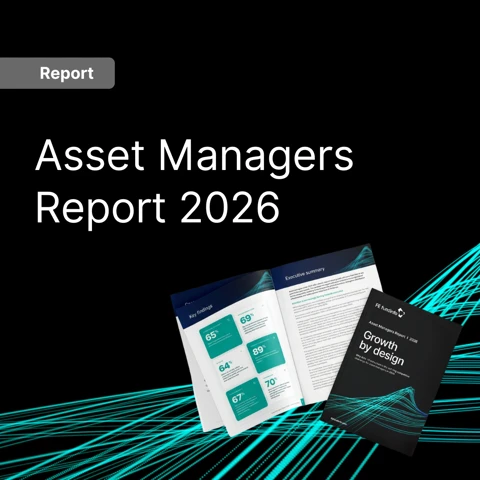
FE fundinfo's 2026 Asset Managers Report puts a number on the scale of the problem facing the wider industry. Regulatory change and compliance ranked as a leading business challenge for asset managers over the next three years, level with delivering asset growth and net inflows, according to the report.

Embargo terms sit squarely inside that challenge. They are a compliance obligation disguised as a data field, and firms that treat them as an afterthought are carrying risk they cannot see until it surfaces in an audit. 

The problem: embargo terms are scattered, manual, and multiplying 

An embargo is the period during which an asset manager restricts access to, or redistribution of, its fund data. It might delay portfolio holdings by 30 days. It might permit internal analysis but prohibit publication of individual security weights. It might change entirely when a fund group renegotiates a distribution agreement, with no guarantee anyone downstream is told. 

None of this is standardised. One asset manager applies a 60-day lag to equity holdings and a 90-day lag to fixed income. Another allows look-through analysis but bans naming individual positions. A third changes terms mid-year. Multiply this across hundreds of fund groups feeding a single portfolio holdings dataset, and you are not managing an embargo policy. You are managing hundreds of them, simultaneously, by hand. 

This is not a hypothetical operational nuisance. It sits inside a problem the industry already admits it has. FE fundinfo's 2026 Asset Managers Report found that 65% of respondents say fragmented fund data is preventing their organisation from improving operational efficiency. Embargo terms are one of the least visible, most manual layers of that fragmentation. They live in side letters, onboarding emails, and the memory of whoever negotiated the data-sharing agreement. They rarely live in the feed itself. 

For firms running full portfolio holdings data with multi-level look-through, the exposure compounds. A single fund-of-funds structure can draw embargo terms from several underlying managers at once. Every layer of look-through carries its own embargo status, and without automation, every layer needs its own manual check. 

This is not an edge case affecting a handful of complex structures. Look-through reporting is now standard practice across the fund-of-funds and multi-manager segment, and every manager in that chain inherits the embargo obligations of the managers beneath them. A single missed embargo does not stay contained to one relationship. It surfaces in a distributor's report, an insurer's product disclosure, or a platform's client-facing output, often several steps removed from where the breach actually happened. 

The consequences: this is a trust problem and a revenue problem, not just an operations problem 

An embargo breach is not a paperwork error. It is a breach of the trust that makes granular, direct-from-source fund data possible at all. Asset managers share holdings and pricing data because they believe the terms attached to it will hold. Break that trust once, and access does not just close for you. It can close for every other recipient relying on the same pipeline, because the asset manager's confidence in the whole distribution chain has been shaken. 

This is where embargo management stops being a back-office detail and starts being commercially decisive. The same report found that 69% of respondents say the speed and accuracy of fund data are becoming more important differentiators in winning and retaining distribution partners. An embargo breach is the fastest way to fail on both counts at once. It makes your data late where it should have been withheld, and wrong where it should have been controlled. 

Regulatory exposure follows close behind. Firms operating under MiFID II, PRIIPS, SFDR, or equivalent regimes are expected to show that data governance extends through every third-party source in the pipeline, not just the systems they built themselves.

FE fundinfo's research ranked regulatory change and compliance burden among the most pressing challenges facing asset managers over the next three years, alongside cost pressure and operational complexity. An embargo breach discovered during an audit does not read as an isolated mistake. It reads as evidence that a firm's data governance has a gap at exactly the point a regulator will look hardest. 

That scrutiny does not stop at the manager's own systems. Distributors, platforms and insurers redistributing that data are asking the same question of their upstream sources, and increasingly expecting evidence that embargo terms are enforced consistently at every point the data changes hands. A manager that cannot show this creates a governance gap for every redistributor downstream of it, turning one firm's manual process into a shared point of regulatory exposure across the distribution chain. 

Then there is the cost nobody puts in a risk register: the operations time spent policing spreadsheets instead of running the analysis the data was sourced for. Every hour spent manually reconciling embargo dates is an hour not spent on valuation, signal generation, or client reporting, the work that actually justifies the cost of the data licence in the first place. 

The solution: embargo logic that lives inside the feed, not beside it 

The firms getting ahead of this are not hiring more people to check spreadsheets. They are removing the spreadsheet from the process entirely, by building embargo logic directly into the data feed at the point of delivery. 

Through FE fundinfo's Data Feeds, embargo management is handled at source, not bolted on afterwards. Each dataset carries configurable embargo controls tied to the specific terms agreed with the originating asset manager, whether that is a fixed lag measured in days, a variable window depending on fund type, or a restriction on redistribution rather than timing. 

In practice, that means a holdings file that only ever contains data currently permitted for release, rather than a full file requiring manual filtering downstream. It means date accuracy controls that flag a change in embargo terms as it happens, rather than leaving your team to discover it after the fact. It means one governed source of embargo status, rather than a set of assumptions spread across different desks, each with its own version of the truth. 

This matters most where the operational stakes are highest. FE fundinfo's coverage spans over 100,000 active funds and 300,000 share classes globally across 75 or more jurisdictions, sourced directly from asset managers with embargo terms built into the onboarding process rather than tracked separately afterwards. That direct-source relationship, rather than a layer of intermediaries, is what makes automated embargo enforcement possible in the first place. You cannot automate a control you do not have a direct line into.

Why this is a growth problem, not just a compliance one 

This is not only about avoiding a bad outcome. It is about whether your data operation can scale at all. As firms expand coverage, deepen look-through, and add new fund groups, each new source relationship is another embargo policy to track. Manual tracking that was manageable at a smaller scale becomes a structural constraint on growth, exactly the constraint FE fundinfo's research keeps surfacing across the industry. 

FE fundinfo's 2026 Asset Managers Report found that 64% of asset managers believe AI will only deliver meaningful value once firms first improve the quality and structure of their underlying data. Embargo status is part of that structure. An AI-driven signal model or reporting workflow built on top of holdings data with unclear or inconsistent embargo status is not a shortcut. It is a way of automating a mistake faster. 

Firms that build embargo compliance into their infrastructure, instead of into an inbox and a spreadsheet, turn a source of operational risk into a source of confidence, for compliance teams, for the asset managers who trust them with proprietary data, and for every model or report downstream that depends on the data being right. 

Where this leaves you 

An embargo is not a barrier to good data. It is the mechanism that makes granular, direct-from-source data possible at all. The question is not whether you can avoid embargo terms. It is whether your infrastructure enforces them automatically, or whether that job still sits with a person and a spreadsheet. 

FAQs

Frequently asked questions

An embargo is the period during which an investment manager restricts access to, or redistribution of, its fund data. It might delay portfolio holdings by 30 days, or it might permit internal analysis while prohibiting publication of individual security weights.

Embargo terms are not standardised. One investment manager may apply a 60 day lag to equity holdings and a 90 day lag to fixed income, while another allows look-through analysis but bans naming individual positions. Multiplied across hundreds of fund groups feeding a single portfolio holdings dataset, this becomes hundreds of embargo policies managed by hand.

A single fund-of-funds structure can draw embargo terms from several underlying managers at once, with every layer of look-through carrying its own embargo status. A missed embargo does not stay contained to one relationship. It can surface in a distributor's report, an insurer's product disclosure, or a platform's client-facing output, often several steps removed from where the breach happened.

An embargo breach can damage the trust that allows granular, direct-from-source fund data to be shared in the first place, and that loss of confidence can affect access for every other recipient relying on the same pipeline. It also creates regulatory exposure under regimes such as MiFID II, PRIIPS and SFDR, where data governance is expected to extend through every third-party source in the pipeline.

Through FE fundinfo's Data Feeds, embargo management is handled at source, with each dataset carrying configurable embargo controls tied to the specific terms agreed with the originating investment manager. This means a holdings file only ever contains data currently permitted for release, and date accuracy controls flag any change in embargo terms as it happens.