Get in touch
2 (22)

How can smaller investment firms launch and register funds faster?

Smaller investment firms launch funds faster when they stop rebuilding fund data from scratch for every launch. Firms that hold their product data in a governed, standardised model launch from a proven structure each time. Everyone else starts from a blank workbook. 

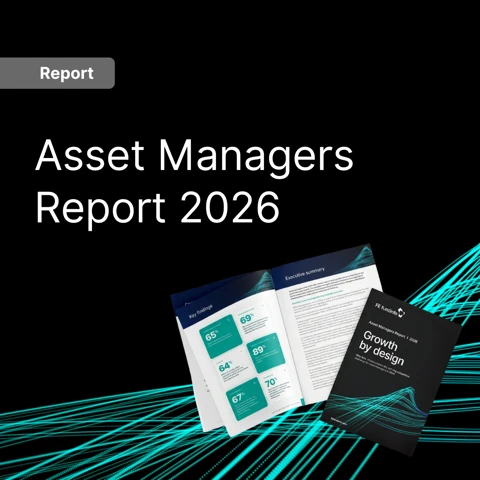
Speed matters more than it used to. Delivering asset growth and net inflows is the joint top business challenge for the next three years. It was cited by 31% of senior leaders in FE fundinfo’s Asset Managers Report 2026, level with regulatory change and compliance. New products are how you capture demand, and a launch that slips by weeks hands that demand to a competitor. 

Distribution partners notice too. 69% of investment managers say the speed and accuracy of fund data are becoming increasingly important when winning and retaining distribution partners. A fast launch with inconsistent data only moves the delay downstream, to platform onboarding queries and registration corrections. 

That answer sounds simple, but it runs against how most smaller firms work in practice. Here is why the data step deserves more attention than it gets, and what removing it looks like. 

Why fund launches take longer than they should 

A fund launch is a coordination exercise across product, legal, operations, compliance and marketing. Most of the visible milestones, such as approvals, documentation and registration, depend on one unglamorous input: complete, correct product data. 

In firms that run on spreadsheets, that data is assembled by hand for every launch. Someone in the product team decides which fields to capture, keys in share class details, chases colleagues for missing values and reconciles the versions that inevitably diverge. Every downstream document and filing then inherits whatever that process produced. 

This is why launches feel slow even at well-run firms. The work is not hard, but it is sequential, manual and error-prone, and any error found late sends the process backwards. 65% of investment managers say fragmented fund data is preventing operational efficiency, and the launch process is where that drag is most visible. 

Where the weeks go 

Map a typical launch and the data delays are easy to find. A product manager decides which fields the new product needs, usually by copying the last launch's workbook and hoping nothing has changed. Values are collected over email from legal, operations and the investment team, each on their own timetable. The versions are merged and reconciled. Then documents are produced, and the first real validation happens when a reviewer spots a wrong figure in a draft KID (Key Information Document) or prospectus. 

Each handoff adds days, and every error found after document production sends work back upstream. The pattern repeats for every share class added later. None of this is a technology problem in the usual sense. It is a blank spreadsheet tax, paid on every launch, because the data structure is rebuilt each time instead of reused. 

Speed matters more than it used to 

Delivering asset growth and net inflows is the joint top business challenge for the next three years, cited by 31% of senior leaders in FE fundinfo's Asset Managers Report 2026, level with regulatory change and compliance. New products are how managers capture demand, and a launch that slips by weeks hands that demand to a competitor. 

Speed also has to survive contact with distribution. 69% of investment managers say the speed and accuracy of fund data are becoming increasingly important differentiators when winning and retaining distribution partners. A fast launch with inconsistent data simply moves the delay downstream, to platform onboarding queries and registration corrections. 

What faster firms do differently 

The pattern among faster firms is standardisation. Rather than treating each launch as a bespoke data exercise, they hold fund, share class and registration data in a standardised model and reuse it as building blocks. Each new product populates a structure that already exists, with validation applied as the data goes in. 

Historically that approach required a full data mastering platform and an implementation project to match, which put it out of reach for boutique and mid-sized managers. That constraint has now gone. 

How a pre-built data model removes the recurring step 

Product Mastering Core from FE fundinfo provides the standardised model off the shelf, as part of Nexus for Investment Managers. An openfunds-aligned structure covers umbrella, fund, share class and registration data with 600+ market-ready fields, so there is no design exercise before your first launch and none for any launch after it. 

  • Validation at the point of entry catches errors during setup, not after documents are produced or filings are made.
  • Approval workflow and audit trail mean launch data is signed off and defensible as it is created.
  • A dedicated registrations object tracks where each share class is registered for sale, keeping cross-border status visible throughout the launch.
  • Custom attributes carry your internal codes and operational data alongside the standard fields, so the model fits your firm rather than forcing a workaround. 

Because the platform is live in days with no implementation project or fees, the time saved starts with the very next launch rather than after a quarter of onboarding. 

Faster launch, and faster everything after it 

Launch speed compounds when the same governed data feeds what comes next. Product Mastering Core is pre-mapped into Nexus for Investment Managers, so approved product data can flow into document production, regulatory dissemination, global funds registration and Trustnet distribution without new integration work. 

That matters for the ongoing life of the fund as much as for launch day. Fee changes, benchmark updates and new registrations are entered once, approved once and reflected everywhere, so the products you launched quickly also stay accurate cheaply. The alternative, updating each downstream document and feed by hand, quietly recreates the launch problem every month. 

It is worth measuring the change. Three numbers tell you whether launch speed is improving: the time from product decision to data-complete, the number of data queries raised per launch by platforms and service providers, and the number of corrections issued after launch. Firms moving from spreadsheets to a governed model typically see all three move in the right direction, and they finally become numbers you can track rather than anecdotes. 

“With Product Mastering Core, we have one reliable source of fund data to work from. This improves consistency, significantly reduces manual effort, and gives us greater confidence in meeting our regulatory and reporting requirements.”

—Cameron Smith, Head of Investor Disclosure, Valu-Trac Investment Management Limited

The practical effect is that the data step comes off from your critical path. Product decisions, not product data, set the pace of your launches. Book a demo to see how quickly that can be true for your next launch. 

Frequently asked questions

Stop assembling fund data from scratch for each launch. A standardised, governed data model lets every new fund or share class populate a proven structure with validation applied at entry, removing a slow, error-prone step from the critical path.

In spreadsheet-based firms, launch data is keyed and reconciled by hand, and every downstream document and filing inherits its errors. Mistakes found late push the launch backwards. 65% of investment managers say fragmented fund data limits operational efficiency. 

Registration depends on accurate share class data reaching the right jurisdictions. A dedicated registrations object tracks where each share class is registered for sale, and governed data can feed global funds registration services directly.

Not with governance built in. Validation at entry, approval workflows and a full audit trail mean the fast version of your launch is also the defensible version, with evidence of what changed, who changed it and when.