Get in touch
Landing Page Product Mastering Essentials(1820X375) (8)

Why AI in investment management starts with fund data quality

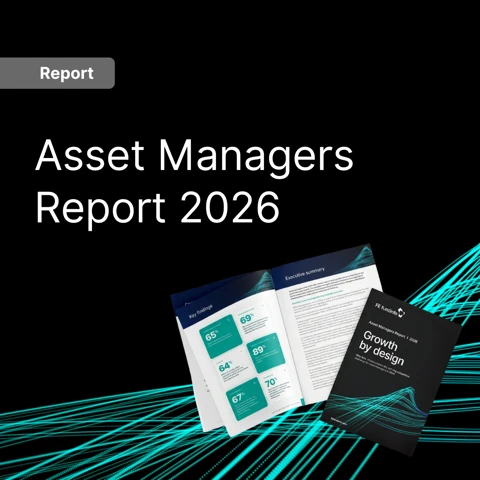
AI adoption in investment management is close to universal. In FE fundinfo's Asset Managers Report 2026 [tracked LINK], 99% of respondents said they are using AI in their business, and 59% report running AI workflows of differing degrees across their operations. 

Yet the same research carries a warning from the people doing the adopting. 64% of investment managers say AI will only deliver meaningful value if firms first improve the quality and structure of their underlying data. The technology is ready. The data, in most firms, is not. 

The gap between using AI and getting value from it 

There is a difference between running AI pilots and running a business on AI. Pilots tolerate messy inputs because a human checks every output. Production workflows do not. The moment AI outputs feed client materials, filings or investment processes, the quality of the underlying data becomes the ceiling on the quality of the results. 

Fund product data is a prime example. If your share class details, fee structures and registration statuses live in conflicting spreadsheet copies, an AI system does not resolve that conflict. It inherits it, at scale and at speed. 

Consider two of the most natural AI use cases for an investment manager: drafting fund documents and answering distributor due diligence questionnaires. Both consume share class and registration data directly. Feed them a governed golden source and they compress days of work into minutes. Feed them three conflicting spreadsheets and they produce confident, well-written answers that are wrong, faster than any human could. 

The barriers firms report are data problems in disguise 

Asked what stops them scaling AI, respondents pointed first to cybersecurity and data privacy concerns (31%), then to lack of governance, explainability or auditability (29%). Both are, at root, questions about whether firms can trust and account for the data flowing through automated systems. 

Explainability starts with knowing where a number came from. When product data has no single owner, no validation and no change history, no AI layer on top can be explained or audited convincingly. Regulators will ask the same questions about AI-assisted outputs that they ask about human ones: what data was used, was it correct, and who approved it. 

The pattern is worth naming plainly. Firms are not held back by a shortage of AI capability. They are held back by uncertainty over whether they can stand behind what the AI produces. That is a data governance question, and it is answered long before any model is chosen. 

"The investment industry is at a pivotal moment. For too long, professionals have been constrained by fragmented systems and manual processes. Nexus AI is our answer - a bold step forward that reimagines how investment decisions are made." Liam Healy, CEO, FE fundinfo 

Why governed data is the groundwork 

Firms that get value from AI share a common foundation: structured, validated, well-governed data. In fund product terms, that means three things. 

  • Structure. Data held in a standardised model, such as one aligned to the openfunds industry standard, gives AI systems consistent, well-defined fields to work with rather than free-text spreadsheet columns.
  • Quality. Validation at the point of entry means the data feeding your models and workflows is correct before it is consumed, not corrected after.
  • Governance. Approval workflows and audit trails give every data point an owner and a history, which is exactly what explainability and auditability require. 

There is a compounding effect too. Governed data does not just make today's AI use case safer. It makes every future one cheaper to build, because each new workflow starts from trusted, structured inputs rather than another round of data cleaning. Firms that fix the foundation once stop paying the remediation cost on every project. 

The reverse also compounds. Every AI workflow built on ungoverned data adds another system that silently depends on the wrong version of the truth, and unwinding that later costs far more than preventing it now. 

None of this is AI technology. All of it determines whether AI technology pays off. That is why the 64% finding matters more than any model announcement this year. 

An AI-readiness checklist for fund data 

Before committing budget to the next AI initiative, it is worth asking five questions of the data it will depend on. 

  • Is there one agreed source for fund, share class and registration data, or several competing versions? 

  • Is data validated when it is entered, or discovered to be wrong after it has been used? 

  • Does every data point have a change history showing who amended it, who approved it and when? 

  • Is the data held in a standardised structure, such as an openfunds-aligned model, that systems can consume without bespoke interpretation? 

  • Could you explain to a regulator, today, where the data behind an AI-assisted output came from? 

Five yes answers mean your AI investments are building on rock. Anything less means some of that budget is quietly funding data remediation, whether or not it is labelled that way. 

Start where your product data lives 

For most investment managers, the fastest place to build that foundation is fund product data: fund, share class and registration records that feed documents, filings and platform feeds every day. It is high-value, well-bounded and currently the most spreadsheet-bound data in the firm. 

Product Mastering Core from FE fundinfo puts that data into a governed, openfunds-aligned model, part of Nexus for Investment Managers, with validation, approval workflow and a full audit trail, live in days with no implementation project. It will not build your AI strategy for you. It will give your AI strategy data it can trust.

Book a demo to see it working, or download the Asset Managers Report 2026 for the full research on AI, data and growth. 

Frequently asked questions

AI systems inherit the data they are given. If fund data is fragmented or inconsistent, AI reproduces those errors at scale. 64% of investment managers say AI will only deliver meaningful value once firms improve the quality and structure of their underlying data.

In FE fundinfo's Asset Managers Report 2026, 99% of respondents said they use AI in their business, and 59% report running AI workflows of differing degrees across their operations. Far fewer have scaled AI into fully integrated production use.

Respondents cited cybersecurity and data privacy concerns (31%) and lack of governance, explainability or auditability (29%) as the leading barriers. Both depend on having trusted, well-governed underlying data.

Structured in a standardised model such as openfunds, validated at the point of entry, and governed with approval workflows and audit trails. This gives AI systems consistent inputs and gives firms the evidence trail that explainability requires.

It provides a governed, openfunds-aligned golden source for fund, share class and registration data, live in days. Clean, structured, auditable product data gives AI initiatives a foundation they can build on.